Custom Media Center in Farmers Branch TX with Built-In Storage
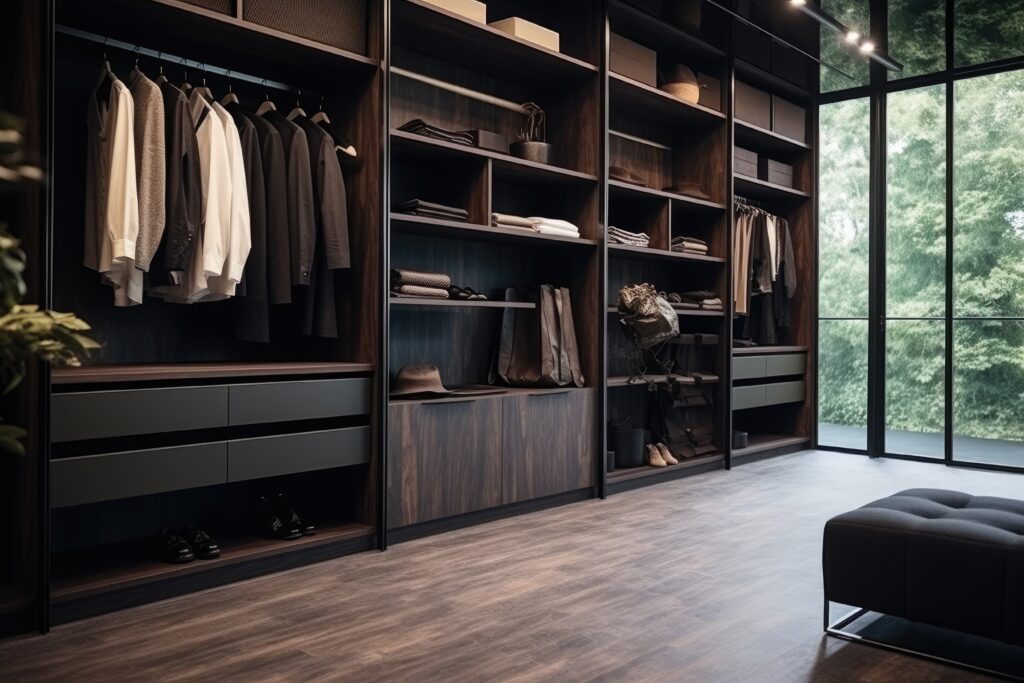
A media wall can do far more than hold a television. When it is designed well, it solves a handful of everyday problems at once. It organizes cables that used to spill across the floor, gives speakers and components a proper home, hides the pile of remotes and game controllers that always seems to collect in the family room, and turns a blank wall into something intentional. For homeowners looking for a Custom Media Center in Farmers Branch TX, built-in storage is often the feature that turns a nice-looking installation into a genuinely useful one.
That distinction matters. A freestanding console can work for a while, but it rarely fits the room precisely. It leaves awkward gaps, wastes vertical space, and often struggles with the practical realities of modern living rooms. Soundbars need breathing room. Receivers run hot. Streaming boxes disappear into clutter. Kids leave devices charging in odd places. Decorative shelves become catchalls. A custom solution addresses these small frustrations before they become permanent habits.
In Farmers Branch, where homes range from established ranch-style layouts to updated traditional interiors and newer builds, there is no single media center design that fits every house. That is exactly why custom work makes sense. The best projects respond to the proportions of the room, the viewing distance, the ceiling height, the location of windows, and the way a family actually uses the space. A media center for a quiet den has different priorities than one in a high-traffic family room where people watch games, stream movies, and store everything from board games to blankets.
What built-in storage changes in a living space
The biggest improvement is visual calm. A room with a custom custom media furniture Farmers Branch media center tends to feel larger and more settled, even when the dimensions have not changed. Built-in cabinetry creates order because every category of item gets an assigned place. Electronics can live behind ventilated doors, books can fill open shelves, and less attractive items can disappear into deep drawers or lower cabinets.
That organization also changes the way the room is used. When storage is built around daily habits, people stop improvising. Charging cords stop migrating from outlet to outlet. Gaming accessories stop taking over the coffee table. Holiday movies, photo albums, and extra throws can stay nearby without being visible all the time. This is especially helpful in open-concept homes in Farmers Branch TX, where the living area is often visible from the kitchen or entry. A tidy media wall helps the entire first floor feel more cohesive.
There is also a design advantage that homeowners sometimes underestimate. A custom media center can anchor the architecture of a room. In homes that lack a fireplace or strong focal point, the media wall often becomes the visual center by default. If that wall is underdesigned, the whole room feels temporary. If it is proportioned correctly, with built-ins that reach intentionally toward the ceiling or span the wall with balanced storage, it can make the room feel finished in a way furniture alone rarely does.
Why custom beats off-the-shelf furniture
Stock media consoles have improved over the years, but they still come with compromises. Widths are fixed. Depths may not suit your equipment. Shelf openings can be too low for larger soundbars or center speakers. The finish may clash with your trim, flooring, or adjacent cabinetry. And perhaps the most common issue, they tend to look undersized beneath today’s larger televisions.
A Custom Media Center avoids those compromises because it is built to your wall, your television, and your storage needs. If the room needs wide lower drawers for toys and slim upper shelves for display, that can be built in. If a client wants tall side cabinets that conceal office supplies because the living room doubles as a work zone, that can be planned. If the wall has an off-center vent, a tricky outlet location, or an unusual baseboard profile, those details can be accommodated rather than awkwardly ignored.
From a practical standpoint, custom work also gives you better control over the details that matter over time. Cabinet door swings, drawer glides, integrated lighting, finish durability, and ventilation are not glamorous talking points, but they determine whether the media center still feels smart five years later. Good design is not just about the reveal on install day. It is about how the piece behaves on an ordinary Tuesday night when someone is trying to stream a movie, charge a tablet, and find the remote in ten seconds.
The most common layout decisions
Every successful media center starts with scale. That means understanding the wall and the equipment before talking about style. The television size matters, but so does the seating distance. A large room can support a broad composition with full-height shelving or cabinetry. A smaller room may benefit from a lower, more horizontal arrangement that does not crowd the wall.
One mistake I see often is trying to force symmetry where the room does not want it. If one side of the wall has a window or doorway, it is usually better to balance visually rather than mirror exactly. A cabinet bank on one side and a lighter shelf treatment on the other can feel more natural than a rigid design that ignores the architecture.
Depth is another point that deserves attention. Lower cabinets often work well around 16 to 24 inches deep depending on what they need to hold. Shelves above can be much shallower, especially if they are mostly decorative. When every section is built at the same depth, the unit can start to feel heavy. Stepping upper portions back slightly often improves the look and keeps the room from feeling crowded.
Homeowners in Farmers Branch TX also benefit from thinking early about whether they want the television wall-mounted, recessed visually within surrounding cabinetry, or resting above a low credenza-style base. Each choice changes the proportions of the unit. Wall-mounting generally looks cleaner and creates easier sightlines, but it requires careful planning for outlet placement, wire concealment, and backing support.
Storage that actually works in daily life
Built-in storage succeeds when it reflects what people own now, not what they imagine a perfectly edited room should hold. A beautiful set of open shelves may look polished in photos, but if the household needs to store gaming headsets, router equipment, kids’ craft bins, and a stack of DVDs they still use, open display alone will become frustrating.
Closed storage usually does the heavy lifting. Drawers are especially effective because they hold a surprising volume and make smaller items easy to access. Deep drawers for blankets, baskets for charging cables, and divided inserts for remotes and accessories can remove a great deal of visual clutter from the room. Cabinet doors work well for larger electronics, board games, or items that do not need constant handling.
Open shelving still has a role. It keeps the media center from feeling too dense and gives the eye places to rest. Books, a few framed photos, ceramics, or a plant can soften the look of a large built-in. The key is restraint. A shelf packed edge to edge rarely reads as intentional. A shelf with some open space almost always looks calmer.
The homeowners who are happiest long-term usually plan for a mix. They accept that some items deserve to be seen and many do not. That is one of the reasons a Custom Media Center in Farmers Branch TX is such a practical investment. It can be tailored to a real family’s habits rather than to a showroom ideal.
Materials and finishes that hold up
Material selection is where style and durability meet. Painted cabinetry remains popular because it works with so many interiors, from crisp transitional homes to softer traditional spaces. White and warm off-white are still common, but there has been a noticeable shift toward richer tones such as taupe, muted green, charcoal, and medium wood stains paired with painted sections. These colors tend to feel grounded and pair well with the flooring and trim often found in Farmers Branch homes.
The right finish depends on how the room is used. In a family room with heavy traffic, a durable cabinet-grade paint or conversion varnish can make a noticeable difference in how well the unit resists scuffs and fingerprints. Matte finishes look sophisticated, but they can show oils on darker colors. Satin often offers a practical balance. For stained wood, the species and grain pattern matter. White oak gives a clean, current look. Walnut adds warmth and richness, though it comes at a higher cost.
Shelf thickness, door style, and hardware all contribute to the final impression. Thin floating shelves can look elegant in the right room, but they need proper support and may not suit heavy book storage. Shaker-style doors remain versatile and age well, while slab fronts can look sharp in more contemporary spaces. Hardware should never feel like an afterthought. A simple pull in the right finish can tie the media center to nearby light fixtures, plumbing fixtures, or door hardware without making the room feel overly matched.
Planning for electronics, heat, and sound
A media center is cabinetry, but it is also infrastructure. That means it has to work with electronics, not just around them. Receivers, gaming consoles, cable boxes, routers, and amplifiers produce heat. Tucking them into a sealed cabinet without ventilation is a common mistake. Even equipment that seems compact can overheat when airflow is poor.
This is where custom design earns its value. Vent slots, open backs in select areas, perforated panels, or carefully hidden air paths can keep components functioning properly without sacrificing appearance. Infrared repeaters or RF remote systems may also matter if devices will be concealed behind doors. These are details that many homeowners do not think about until after installation, when they realize a closed cabinet blocks signals or traps too much heat.
Speaker placement deserves similar attention. If surround sound or a dedicated sound system is part of the plan, the media center should be designed around it from the start. A soundbar needs enough width and height clearance. Built-in speakers may require acoustically transparent fabric panels or specific cavity dimensions. Even if the setup is simple today, planning a little extra flexibility is wise. Technology changes quickly, and a smart cabinet design can accommodate upgrades without major reconstruction.
Wire management is another feature that separates average work from excellent work. Hidden chases, access panels, and dedicated power locations keep the installation clean and serviceable. A good system looks tidy from the front, but it also makes sense behind the scenes.
Fitting the style of Farmers Branch homes
Farmers Branch has a mix of architectural personalities, which makes context important. In older ranch homes, proportions often favor low, long built-ins that respect the horizontal lines of the house. Ceiling heights may be more modest, so overbuilding the wall can make the room feel compressed. A media center in that setting often works best when it feels integrated with the original scale of the home, perhaps with warm wood tones or painted cabinetry that complements existing trim.
In updated traditional homes, there is often room for a more substantial composition. Ceiling-height cabinetry, crown integration, and symmetrical side storage can work beautifully if the wall and furnishings support it. In newer homes with open living areas, the media center often needs to perform for more than one viewpoint. It may be seen from the kitchen island, breakfast area, or entry hall. Clean lines and disciplined styling become especially important there because the unit affects the feel of multiple spaces at once.
I have found that the strongest projects in Farmers Branch TX rarely chase a trend too aggressively. Instead, they pick a style language that fits the house and refine it. A well-built media center should still make sense when paint colors shift and furniture changes. Timeless proportion tends to age better than novelty.
The budget conversation homeowners should have early
Cost is one of the first questions homeowners ask, and the honest answer is that custom pricing varies widely. Size, material choice, finish complexity, site conditions, electrical work, lighting, hardware quality, and installation difficulty all affect the number. A simple wall-spanning built-in with lower cabinets and a few upper shelves will land in a different range than a floor-to-ceiling feature wall with integrated lighting, hidden equipment bays, and premium finishes.
The part that matters most is understanding where the money goes. Custom cabinetry is labor-intensive. Precision measuring, fabrication, finishing, delivery, and installation all require skill. When the project includes electrical relocation, backing for a wall-mounted television, or modifications to existing trim and baseboards, those costs add up as well. Homeowners are usually better served by simplifying a few visual features than by compromising on build quality where it counts, especially in drawer hardware, door alignment, and finish durability.
A thoughtful builder or cabinetmaker should be able to explain the trade-offs clearly. For example, reducing the number of specialty drawers, simplifying door styles, or choosing a painted finish instead of a premium stain can help control cost without undermining the overall function. On the other hand, skimping on ventilation, lighting access, or structural support for a large television is rarely worth it.
Details that separate a good installation from a frustrating one
Some of the best media centers are Custom Media Center in Farmers Branch TX not the flashiest. They simply feel easy to live with. That usually comes down to details such as these:
- Proper viewing height for the television from the main seating area.
- Ventilation for any enclosed electronics.
- Enough outlet capacity in the right locations.
- Storage dimensions based on actual items, not rough guesses.
- Finish and trim work that integrate with the room instead of fighting it.
Each of those sounds obvious, yet each is missed regularly in rushed projects. I have seen beautiful cabinetry built around a television that was mounted too high for comfortable viewing. I have also seen elegant lower cabinets that could not fit a subwoofer, game console, or even standard board game boxes because no one measured the contents in advance. The lesson is simple. A custom media center should be designed from use backward, not from appearance forward.
Lighting and display without the showroom effect
Integrated lighting can make a media center feel polished, but it needs a light hand. Warm LED strip lighting in shelves or cabinets can add depth and make display items easier to see in the evening. It can also provide ambient light during movie nights when overhead cans feel too harsh. The problem comes when lighting is too cool, too bright, or too visible as a fixture rather than as illumination.
The same principle applies to styling. Built-ins should not be packed with decor just because the shelves exist. A few books, sculptural objects, framed art, or seasonal pieces are enough. Negative space matters. It gives the cabinetry room to breathe and keeps the wall from becoming visual noise.
For homeowners who want the television to recede when not in use, there are several approaches. Dark wall paint behind the screen can help it blend in. Surrounding shelving can soften the dominance of the rectangle. Some people explore art screens or panel systems, though those options need to be weighed against budget and convenience. Most of the time, a well-proportioned built-in with thoughtful styling is enough to keep the television from feeling overpowering.
Timing, coordination, and living through the project
If the media center is part of a larger renovation, it should be planned early. Electrical locations, backing, flooring transitions, and paint schedules all become easier when the cabinetry is coordinated in advance. In a single-room update, the process is still smoother when measurements happen after final flooring or trim decisions are made. Small dimensional changes can affect the fit of built-ins more than many people expect.
Installation itself is usually less dramatic than a kitchen renovation, but it still requires preparation. Walls may need touch-up paint afterward. Baseboards might be modified. Access to the room needs to be clear. If the project includes new outlets, lighting, or cable rerouting, there may be a short period when the television area is out of service. Families with children often appreciate having a temporary plan for entertainment in another room during that window.
The payoff comes quickly once the unit is in place. The room starts functioning better almost immediately because the storage solves real, everyday annoyances. That is one reason homeowners who invest in a Custom Media Center often say they wish they had done it earlier.
What to ask before moving forward
Before committing to a design, it helps to answer a few practical questions with complete honesty. What equipment needs to be housed today, and what might be added in the next few years? How much of the storage should be closed? Is the room formal, casual, or doing double duty? Does the style need to blend with adjacent built-ins or kitchen cabinetry? How visible is the media wall from other parts of the house?
The strongest answers usually come from observing the room as it is currently used. Look at what accumulates near the television now. Notice whether the family reaches for blankets, chargers, controllers, or books in that space. Pay attention to glare during the afternoon and whether the current screen height feels comfortable. Real-life behavior offers better design guidance than any inspiration image.
A well-designed Custom Media Center in Farmers Branch TX is not just a piece of cabinetry. It is a response to the way a household lives, relaxes, hosts, and stores things. When built-in storage is handled thoughtfully, the result looks tailored to the home because it is. The wall becomes cleaner, the room becomes calmer, and the practical mess of modern media finally has a place to go.